
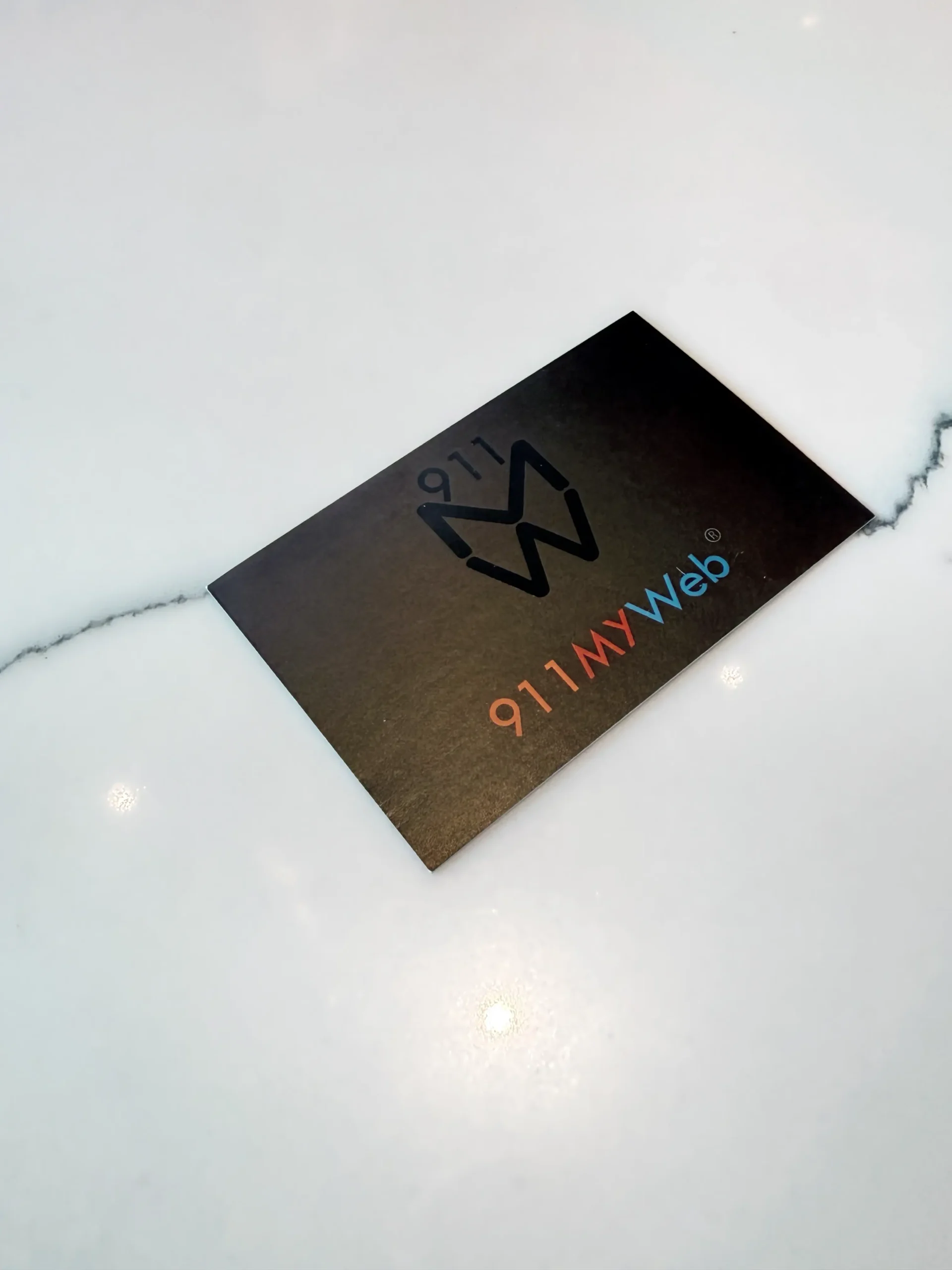
Silk Laminated Business Cards: A Complete Guide to Premium Branding
Introduction
At 911MyWeb, we focus on web design, graphic design, and branding solutions that ensure consistency across every touchpoint of your business. Just as your website communicates your brand online, your business card represents it in the physical world. One of the most effective ways to leave a lasting impression is through silk laminated business cards. These premium cards combine elegance, durability, and brand consistency — creating a powerful first impression that matches the look and feel of your digital presence.
What is Silk Lamination?
Silk lamination is a special coating applied to printed business cards. It gives the card a smooth, soft-touch texture while protecting it from scratches and wear. Unlike glossy finishes, silk lamination provides a refined matte effect that exudes sophistication and professionalism.
Why Choose Silk Laminated Business Cards?
-
Premium Look & Feel – A smooth texture that feels luxurious in hand.
-
Durability – Cards last longer without fading or tearing.
-
Versatility – Compatible with special finishes like foil stamping, spot UV, and embossing.
-
Brand Alignment – Matches your digital brand aesthetics for a consistent identity.
Step-by-Step Process of Designing Silk Laminated Business Cards
1. Align Design with Branding
Before opening design software, align the card design with your website and brand identity. Use consistent colors, typography, and logo placement to maintain brand recognition across all platforms.
2. Set Up the Design File Correctly
-
File format: Adobe Illustrator (.AI), Photoshop (.PSD), or InDesign (.INDD).
-
Color mode: CMYK for accurate print colors.
-
Resolution: 300 DPI for sharp images.
-
Bleed area: At least 1/8 inch to prevent trimming issues.
-
Safe zone: Keep logos and text inside to avoid cutoffs.
3. Proof and Approve the Design
Request a digital proof or printed sample to ensure color accuracy and finishing align with expectations.
4. Printing and Silk Lamination
Once approved, the printer produces the cards, applies silk lamination, and adds any finishing touches like spot UV or foil stamping. The final product is durable, elegant, and unforgettable.
Importance of Owning the Design File
Having access to your editable design file is critical:
-
Future reprints – Reorder without redesigning.
-
Quick edits – Update contact details, titles, or branding.
-
Consistency – Keep every batch aligned with your identity.
-
Full ownership – Stay independent of a single designer or vendor.
7 Common Questions About Designing Silk Laminated Business Cards
Q1: What is silk lamination on a business card?
A: A matte protective layer that provides a smooth, soft-touch finish and long-lasting durability.
Q2: What file format should I provide to my printer?
A: A print-ready PDF for production and an editable source file (AI, PSD, or INDD) for future updates.
Q3: Can I add spot UV or foil stamping to silk laminated cards?
A: Yes, these premium finishes enhance the look and pair beautifully with silk lamination.
Q4: Do I need to include bleed in my design file?
A: Yes. A minimum of 1/8 inch bleed is essential to avoid white edges after trimming.
Q5: Why is CMYK better than RGB for print?
A: CMYK ensures accurate color reproduction during the printing process.
Q6: What’s the standard size for business cards?
A: The U.S. standard is 3.5″ x 2″, but custom sizes are also available.
Q7: Can I reuse my business card design file for other branding materials?
A: Absolutely. The design file can be adapted for brochures, flyers, and digital graphics to maintain brand consistency.


